




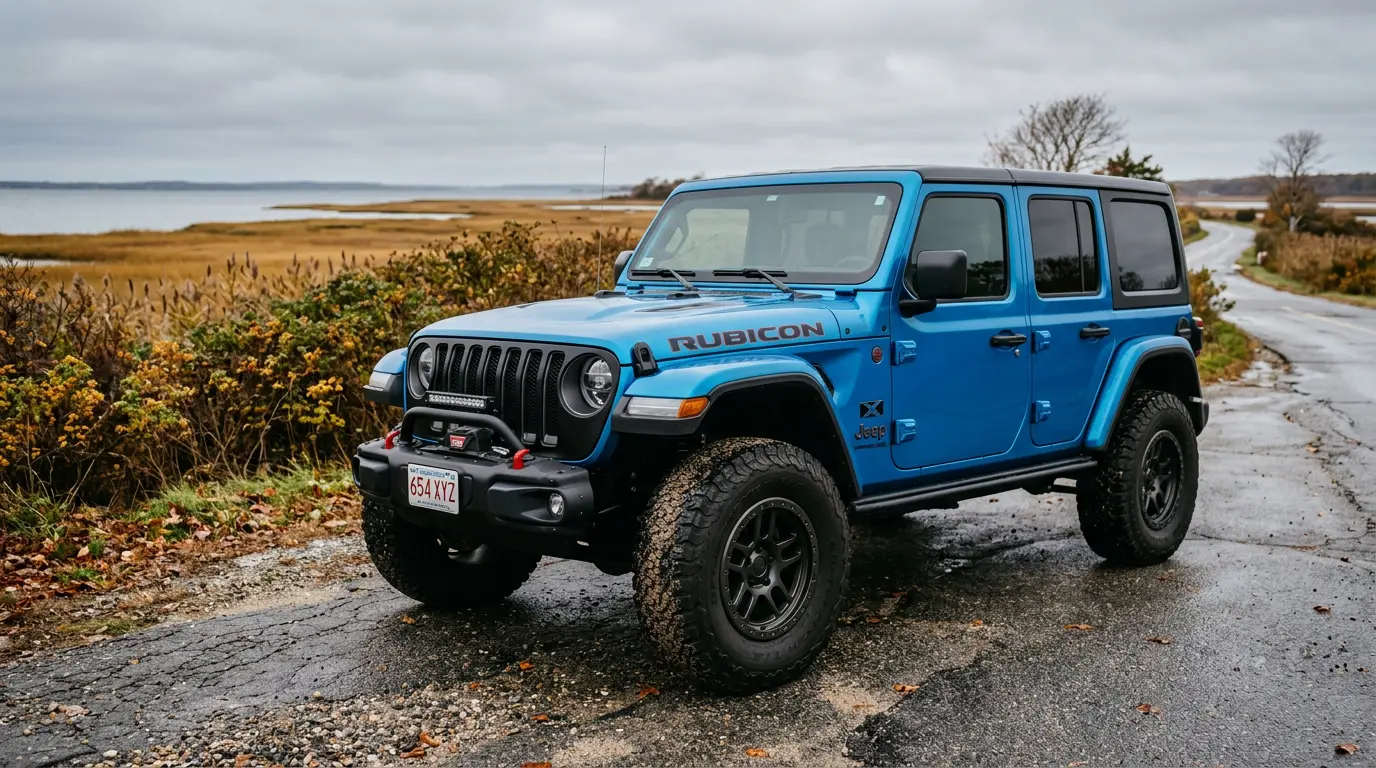
Living near the coast means facing a unique combination of driving conditions, from sandy beaches and salty air to unpredictable winter weather. Selecting the right tires for your Jeep requires balancing these regional demands to ensure safety, traction, and longevity. The humid, salt-heavy air of coastal areas can accelerate the degradation of rubber compounds, making regular tire inspections and high-quality rubber selection critical for local drivers.
When choosing tires, you must consider how your vehicle is utilized. A daily commuter navigating the urban avenues of Providence needs a different tread pattern than an off-road enthusiast heading to the trails. For highway driving and light trail use, All-Season or All-Terrain tires offer a balanced rubber compound that maintains flexibility in cooler weather while providing a quiet ride on dry pavement. If you frequently encounter mud, wet sand, or deep snow, more aggressive tread designs with wider shoulder grooves are necessary to self-clean and maintain a firm grip.
Maintaining your tires is just as important as choosing the right set. To keep your vehicle performing safely, you can schedule service online with our factory-trained technicians. If you have immediate questions about tire wear or need to discuss specific tire brands, feel free to give our service team (508) 984-1900 a quick call. For those ready to bring their vehicle in for a professional assessment, you can find our service center directions to plan your visit to our Dartmouth location.
Table of Contents
- Understanding the Factory Bolt Pattern for Jeep Wrangler Wheels and Aftermarket Fitment
- Do Mud-Terrain Tires Decrease Jeep Fuel Economy on Highway Commutes?
- Do I Need Dedicated Winter Tires If My Jeep Compass Has 4WD?
- How to Perform the Penny Test on Jeep Tires and Identify Wear Patterns
- Should a Jeep Wrangler 5-Tire Rotation Include the Spare Tire?
- Common Questions About Jeep Tire Maintenance and Replacement
- Where to Buy Certified Jeep Tires and Schedule Professional Installation
Understanding the Factory Bolt Pattern for Jeep Wrangler Wheels and Aftermarket Fitment
A common inquiry from Jeep Wrangler owners looking to upgrade their wheels or replace damaged components involves the vehicle's wheel mounting specifications. For modern Jeep Wrangler models, specifically the JL generation, the factory wheel configuration utilizes a 5x5 inch bolt pattern, which is also commonly referred to in metric terms as a 5x127mm pattern. This means the wheel features five lug nut holes arranged in a circle with a diameter of five inches.
When shopping for aftermarket wheels or swapping factory wheels between different model generations, matching this pattern is critical. Older Wrangler generations, such as the TJ, utilized a 5x4.5 inch pattern, while the JK generation shared the modern 5x5 inch layout but differed in offset and backspacing requirements. Mounting a wheel with an incorrect bolt pattern or utilizing adapters can place severe stress on the wheel bearings, suspension components, and wheel studs, potentially leading to mechanical failure on the road.
Beyond the bolt pattern, you must pay close attention to the thread size and torque specifications. Modern Wranglers use 14x1.5mm lug studs, which require a different torque profile than older models. Our parts department can assist you in finding exact OEM replacements or verified aftermarket wheels that maintain factory geometry. Before purchasing new hardware, check our rotating service and parts specials to find current savings on professional installation and alignment services.
Do Mud-Terrain Tires Decrease Jeep Fuel Economy on Highway Commutes?
Upgrading to aggressive Mud-Terrain tires is a popular choice for drivers who want to maximize off-road capability, but this modification comes with measurable trade-offs on paved roads. Because Mud-Terrain tires feature large tread blocks, deep voids, and heavy reinforced sidewalls, they exhibit significantly higher rolling resistance compared to standard highway or All-Terrain tires. This means your engine must work harder to push the vehicle forward, directly impacting your fuel efficiency.
On typical highway commutes, switching from standard factory tires to heavy-duty Mud-Terrain tires generally decreases fuel economy by 1 to 3 mpg. The heavier weight of the tire increases rotational mass, which slows down acceleration and requires more energy to maintain highway speeds. Additionally, the wide tread blocks create aerodynamic drag and generate substantial road noise, which can diminish cabin comfort during long drives.
For those who use their Jeep as a daily driver but still want off-road capability, hybrid tires or modern All-Terrain options offer a practical middle ground. These designs pull the tighter center tread patterns from highway tires to lower rolling resistance while keeping the aggressive shoulder blocks of off-road tires for traction in loose dirt or sand. Regularly checking tire pressure is also vital, as under-inflated Mud-Terrain tires will drag even more, further compounding fuel loss and causing premature, uneven wear.
Do I Need Dedicated Winter Tires If My Jeep Compass Has 4WD?
A common misconception among SUV owners is that having a capable four-wheel-drive system eliminates the need for specialized seasonal rubber. While the active four-wheel-drive system on a vehicle like the 2026 Jeep Compass is excellent for sending power to all four wheels to help you accelerate from a stop in deep snow, it does not assist with stopping or steering. When you apply the brakes or turn the steering wheel on an icy road, your vehicle relies entirely on the mechanical grip of your tire tread and the flexibility of the rubber compound.
Standard All-Season tires are manufactured with a rubber compound designed to withstand summer heat, which causes them to stiffen when temperatures drop below 45 degrees Fahrenheit. Once the rubber hardens, it loses its ability to conform to the road surface, drastically reducing traction even on dry pavement. Dedicated winter tires are formulated with specialized silica-infused compounds that remain soft and pliable in sub-freezing temperatures, allowing the tread to grip the road effectively.
Furthermore, winter tires feature thousands of tiny channels called sipes. These sipes flex as the tire rolls, biting into ice and packed snow to evacuate water and prevent hydroplaning. If your winter driving consists of navigating steep, unplowed hills or dealing with frequent black ice, equipping your vehicle with dedicated winter tires will provide a substantial safety margin that four-wheel drive alone cannot replicate.
How to Perform the Penny Test on Jeep Tires and Identify Wear Patterns
Monitoring your tread depth is a simple yet effective way to ensure your vehicle remains safe on wet and slippery roads. The classic penny test is an easy, reliable method to check if your tires have reached the end of their usable lifespan. To perform this test, insert a standard penny upside down into several tread grooves across the width of the tire, making sure Lincoln's head is facing down into the rubber.
If you can see the top of Lincoln's entire head, your tread depth has worn below 2/32 of an inch. At this stage, the tire can no longer safely disperse water, greatly increasing your stopping distances and the risk of hydroplaning. If the tread covers a portion of the head, your tires still have safe depth, but you should continue to monitor them monthly as winter approaches.
While checking tread depth, it is equally important to inspect the tire for unusual wear patterns:
- Center Wear: Often indicates consistent over-inflation, forcing the middle of the tire to contact the road prematurely.
- Edge Wear: Typically points to under-inflation, which causes the tire shoulders to support the weight of the vehicle.
- Cupping or Scalloping: Diagonal dipping patterns across the tread usually signal worn suspension components or severely misaligned wheels.
- One-Sided Wear: If the inner or outer edge is wearing faster than the rest of the tire, your front-end alignment is likely out of specification.
Should a Jeep Wrangler 5-Tire Rotation Include the Spare Tire?
Unlike most modern passenger cars that carry compact space-saver spares, the Jeep Wrangler features a full-size spare tire mounted on the rear tailgate. Because this spare is identical to the other four tires on the vehicle, incorporating it into your regular maintenance routine through a five-tire rotation is highly recommended. This practice ensures that all five tires wear down at an even rate over their lifespan.
Including the spare in your rotation cycle extends the overall life of your tire set by roughly 20 percent because each individual tire spends less time on the road. More importantly, keeping the spare worn evenly with the other tires protects your vehicle's mechanical components. If you drive on four partially worn tires and experience a flat, mounting a brand-new, full-depth spare can place stress on your four-wheel-drive differentials due to the slight difference in tire diameter.
During a standard five-tire rearward cross rotation, the spare tire is moved to the right rear position. The front tires cross as they move to the rear, the left rear tire moves up to the left front, and the right rear tire becomes the new spare. Performing this service every 5,000 to 7,500 miles keeps your tread depths uniform and ensures that your spare tire is always in safe, road-ready condition when you need it most.
Common Questions About Jeep Tire Maintenance and Replacement
Navigating tire maintenance can raise several technical questions regarding fitment, alignment, and sourcing. Keeping your vehicle's steering and suspension aligned is especially important for 4x4 vehicles that handle rough terrain or heavy highway commutes. When tires wear unevenly, it affects handling precision and shortens the lifespan of expensive tread.
If you are replacing worn components, utilizing high-quality Mopar parts ensures your vehicle maintains its factory-specified ride quality and safety ratings. You can order exact-match replacement wheels, tire pressure sensors, and mounting hardware directly through our Mopar parts department to ensure perfect compatibility with your vehicle's suspension geometry.
Q: How often should I have my Jeep's wheel alignment checked?
A: It is best practice to have your alignment inspected every 12,000 miles or once a year. If you frequently travel over rough roads or notice your steering wheel pulling to one side, you should have it checked sooner to prevent rapid tire wear.
Q: Can I replace just two tires on my four-wheel-drive Jeep?
A: Replacing only two tires is not recommended for four-wheel-drive systems because differing tread depths create minor variations in tire speed. This variance can cause the drivetrain to bind, potentially damaging the transfer case or differentials over time.
Q: What is the correct tire pressure for my factory Jeep tires?
A: The recommended tire pressure is listed on the tire information placard located on the driver's side door jamb. Do not use the maximum pressure listed on the tire sidewall itself, as this figure represents the maximum load capacity rather than the optimal pressure for daily driving.
Q: Why is my tire pressure warning light on when the tires look full?
A: Sudden drops in ambient temperature can cause tire pressure to decrease, triggering the warning sensor. If your pressures are correct when checked with a manual gauge, the system may need a brief drive to recalibrate, or a sensor battery may require replacement.
Q: Do I need to rebalance my tires when they are rotated?
A: While not strictly mandatory at every rotation, having your tires balanced every 10,000 miles helps prevent high-speed vibrations. Balancing compensates for natural weight variations that occur as the tread wears down over time.
Where to Buy Certified Jeep Tires and Schedule Professional Installation
When it is time to replace your tires, choosing an authorized service center ensures your vehicle receives the correct load ratings, speed ratings, and tread designs specified by the manufacturer. Our certified technicians understand the precise suspension setups of 4x4 systems and can perform precise mounting, balancing, and wheel alignments to keep your vehicle tracking straight.
If you are traveling from Fall River, our service center is easily accessible via major local routes, providing a convenient option for professional tire care. We stock a wide inventory of top-tier tire brands designed specifically for the unique demands of your vehicle, whether you drive a compact commuter or an off-road-ready trail machine.
To get started on your tire replacement or maintenance, you can use our online scheduler or contact our team directly. For step-by-step navigation, feel free to view our dealership location details to find us at 42 State Rd, Dartmouth, MA 02747. You can also reach our service advisors by calling (508) 984-1900 to discuss tire availability, pricing options, and current installation appointments.
© 2026 Colonial South Chrysler Ram Jeep and Dodge. All rights reserved.