




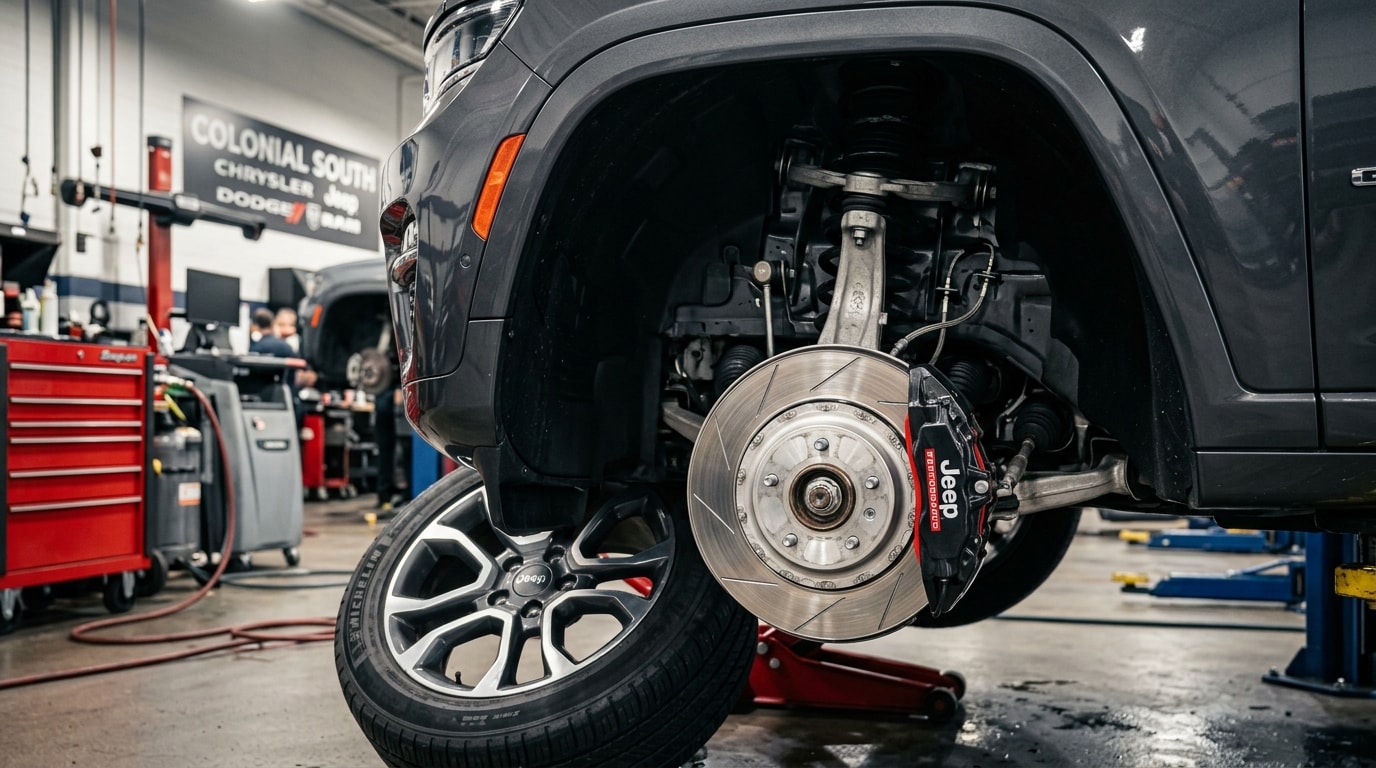
The braking system on a 2026 Jeep is a sophisticated network of hydraulic and mechanical components designed to handle everything from stop-and-go traffic in Providence to demanding off-road trails. Maintaining this system requires more than just waiting for a warning light; it involves regular inspections of the brake pads, rotors, and hydraulic lines to ensure peak stopping power. Because Jeeps are often used for towing or traversing uneven terrain, the friction material on the pads can wear at different rates depending on your specific driving habits and the weight of your cargo.
For most 2026 models, including the 2026 Jeep Grand Cherokee, a comprehensive brake inspection is recommended every 5,000 to 7,500 miles. This typically aligns with your oil change and tire rotation interval, allowing our technicians to measure pad thickness and check for heat-related scoring on the rotors. If you notice any changes in pedal feel or stopping distance, you can easily schedule a service appointment to have our team perform a multi-point inspection. Catching thin pads early prevents the "metal-on-metal" contact that leads to expensive rotor damage.
Heavy-duty use cases, such as frequent towing with the Trailer Tow Package 995, put additional thermal stress on the braking hardware. When heat builds up during long descents or heavy braking, it can lead to brake fade, where the pads lose their ability to grip the rotors effectively. To maintain the safety and integrity of your vehicle, we invite you to visit our Dartmouth service center for a professional evaluation. If you have questions about a specific noise or vibration you are feeling, calling our team at (508) 984-1900 is the fastest way to get an expert opinion.
Table of Contents
- Standard Service Intervals and Brake Fluid Flush Requirements
- Identifying Warning Signs and Common Brake Component Wear
- Comparing Ceramic Pads and Heavy Duty Friction Materials
- Maximizing Component Life Through Rotor and Pad Replacement Strategies
- Protecting Your Warranty with Genuine Mopar Parts and Certified Service
- Quick Answers Before You Visit
- Contact Our Jeep Service Experts
Standard Service Intervals and Brake Fluid Flush Requirements
Brake fluid is the lifeblood of your Jeep's stopping system, yet it is often the most overlooked maintenance item. This hydraulic fluid is hygroscopic, meaning it naturally absorbs moisture from the air over time. In a cold-winter climate like ours, this moisture can lead to internal corrosion within the calipers and master cylinder, or even cause the fluid to boil under heavy use. For the 2026 lineup, the standard recommendation is to perform a complete brake fluid flush every 2 years or 20,000 miles to maintain proper hydraulic pressure and protect internal seals.
The service interval for physical hardware like pads and rotors generally falls between 20,000 and 30,000 miles for standard highway driving. However, the 2026 Jeep Wrangler often requires more frequent attention if it is regularly used for off-roading. Dust, mud, and water crossings can introduce debris into the braking assembly, which accelerates the wear on slide pins and friction surfaces. Our technicians check for contaminated fluid—which often appears dark or cloudy—during every routine visit to ensure your Basic Limited Warranty protections remain robust.
Proactive maintenance not only ensures safety but also helps manage long-term ownership costs by preventing secondary failures. When you stay ahead of these intervals, you can often take advantage of our current service and parts specials to keep your vehicle in top condition. Whether you are commuting daily or preparing for a weekend trip, fresh fluid ensures that the anti-lock brakes and stability control systems can react with the millisecond precision they were designed for.
Identifying Warning Signs and Common Brake Component Wear
Recognizing the early symptoms of brake wear can save you from a breakdown or a significantly higher repair bill. One of the most common signs that your 2026 Jeep needs service is a high-pitched squealing noise when applying pressure to the pedal. This is often caused by a small metal wear indicator built into the pad that is designed to make noise once the friction material drops below a safe thickness, typically around 3 millimeters. If this sound transitions into a harsh grinding noise, it indicates the pads are completely exhausted and are now damaging the iron rotors.
Other physical cues often manifest through the steering wheel or the brake pedal itself. If you feel a rhythmic pulsation or vibration while slowing down, it usually points to "warped" rotors or uneven pad deposits caused by excessive heat. For larger vehicles like the 2026 Jeep Grand Wagoneer, which has a higher curb weight, maintaining smooth rotor surfaces is essential for comfort and safety. A "spongy" or soft pedal that sinks toward the floorboard is a more urgent sign, often suggesting air in the lines or a leak in the hydraulic system that requires immediate professional diagnostics.
When components do reach the end of their service life, using the correct hardware is vital for maintaining the original performance of your vehicle. You can find high-quality, vehicle-specific replacements through our Mopar parts department, ensuring every clip, shim, and pad meets factory specifications. Beyond the pads, our team also inspects the rubber brake hoses for cracking and the calipers for sticking slide pins, which can cause one brake to wear much faster than the others.
Comparing Ceramic Pads and Heavy Duty Friction Materials
Choosing the right friction material depends largely on how you use your Jeep. Most 2026 models come equipped from the factory with semi-metallic or ceramic-blend pads. Ceramic pads have become a popular choice for daily drivers in suburban areas like Seekonk because they offer several distinct advantages for the average commuter. They are generally quieter, produce significantly less dark brake dust on your wheels, and provide a very consistent pedal feel across a wide range of operating temperatures.
For owners who prioritize capability, such as those driving a 2026 Jeep Wrangler Rubicon or a 2026 Jeep Grand Wagoneer used for heavy hauling, heavy-duty semi-metallic pads might be more appropriate. These materials are better at dissipating the extreme heat generated by towing or frequent downhill braking. While they can be slightly noisier and produce more dust than ceramic alternatives, their "bite" is often more aggressive, providing the peak force needed to stop a fully loaded vehicle or one equipped with larger aftermarket tires.
We also see specialized needs for vehicles like the Wrangler Moab 392, where the 470-horsepower engine and 35-inch tires demand a braking system that can handle high-torque situations. In these cases, the choice of pad material affects not just stopping distance, but also how the anti-lock brakes interact with the terrain. Our service team can help you determine if an upgrade to a different friction material is beneficial based on your specific towing requirements or off-road frequency.
Maximizing Component Life Through Rotor and Pad Replacement Strategies
A common question we hear from Jeep owners is whether it is necessary to replace rotors every time the pads are changed. While it is technically possible to just "slap" new pads on old rotors, this often leads to a decrease in braking efficiency and a shorter lifespan for the new pads. If the old rotors have any grooving, heat spots, or thickness variations, the new pads will not seat correctly, leading to noise and reduced contact area. In most cases, replacing both components together is the most cost-effective long-term strategy because it ensures a perfectly flat mating surface.
For vehicles like the 2026 Jeep Grand Cherokee, which features advanced Small overlap front safety reinforcements, the precision of the braking system is a core part of the vehicle's safety rating. Using matched sets of pads and rotors ensures that the electronic brake-force distribution and emergency braking systems function exactly as the engineers intended. If the rotors are still within the manufacturer's minimum thickness specifications and are free of warping, they can sometimes be "resurfaced" or turned, but for modern high-performance Jeeps, replacement is often the preferred path for maximum reliability.
Driving habits also play a significant role in how long these parts last. In the urban environment of Fall River, frequent stops can lead to faster wear than highway cruising. We recommend avoiding "riding the brakes" on long descents and instead using engine braking where appropriate. Keeping your wheels clean of road salt and debris also prevents the rotors from developing premature corrosion, which can lead to "pitting" and uneven wear patterns that shorten the life of the entire assembly.
Protecting Your Warranty with Genuine Mopar Parts and Certified Service
Maintaining your 2026 Jeep with genuine Mopar parts is the best way to ensure that your 3 years / 36,000 miles Basic Limited Warranty and 5 years / 60,000 miles Powertrain Limited Warranty remain fully protected. While the Magnuson-Moss Warranty Act prevents a manufacturer from voiding your entire warranty simply because you used an aftermarket part, problems arise if that aftermarket component causes a failure in a related system. For example, if an incorrectly sized aftermarket pad causes a caliper to seize or damages a wheel speed sensor, the resulting repairs may not be covered by Jeep.
Certified service at our dealership also ensures that your vehicle receives the latest software updates for its braking and stability control systems. The 2026 models rely heavily on electronic sensors to manage traction and emergency stops; these systems often require recalibration after certain brake repairs. Our technicians use factory diagnostic tools that independent shops may not have, ensuring that your Uconnect 5 NAV system and digital cluster can accurately report any braking issues.
Furthermore, every genuine Mopar brake component is designed specifically for the weight and performance characteristics of your model. Whether it is the specific iron alloy used in the rotors for a 2026 Jeep Grand Wagoneer or the specialized hardware for a Wrangler, these parts are tested to meet the same safety standards as the ones that came on the vehicle from the factory. This commitment to quality provides peace of mind that your Jeep will perform predictably in an emergency situation.
Quick Answers Before You Visit
Q: What are common signs that my 2026 Jeep brakes need service? The most frequent indicators include a squealing or grinding noise when braking, a vibration in the steering wheel, or a "soft" brake pedal that feels different than usual. You may also notice that the vehicle pulls to one side during stopping or that the stopping distances have noticeably increased.
Q: What is the recommended interval for a 2026 Jeep brake fluid flush? We recommend a full brake fluid flush every 2 years or 20,000 miles to prevent moisture buildup. This is especially important in our local climate, where humidity and temperature swings can lead to fluid contamination and internal corrosion of the braking system.
Q: Can aftermarket brakes void my Jeep warranty? Using aftermarket parts does not automatically void your warranty, but if an aftermarket brake component causes a failure in a covered part (like a caliper or ABS sensor), that specific repair may be denied coverage. Sticking with genuine Mopar parts ensures complete compatibility and preserves your factory protections.
Q: Is it cheaper to replace Jeep brake pads and rotors together? While the upfront cost is higher, replacing them together is often cheaper over the life of the vehicle. New pads on old, worn rotors will wear out significantly faster and may cause noise or vibrations that require you to pay for labor a second time to fix the rotors later.
Q: What type of brake fluid does a 2026 Jeep Grand Cherokee use? Most 2026 models, including the Grand Cherokee, are designed to use DOT 3 or DOT 4 brake fluid. You should always check the specific requirement printed on your master cylinder reservoir cap or consult with our service team to ensure the correct hydraulic fluid is used.
Contact Our Jeep Service Experts
If you have noticed a change in how your Jeep handles or stops, our certified technicians are ready to help. From routine fluid flushes to complete rotor replacements, we use factory-grade equipment to keep your vehicle performing at its best. If you would like to speak with a service advisor about your specific maintenance needs, you can give our team a quick call to discuss your concerns. For those ready to drop off their vehicle, you can find our service department conveniently located on State Rd. We look forward to helping you maintain the safety and capability of your Jeep for years to come.
© 2026 Colonial South Chrysler Ram Jeep and Dodge. All rights reserved.