




A 2026 Ram truck requires a routine brake inspection every 10,000 miles or at every scheduled oil change. Brake pads on a full-size pickup generally last between 30,000 and 70,000 miles, while brake rotors typically require resurfacing or replacement between 50,000 and 70,000 miles depending on driving habits, towing frequency, and local climate conditions.
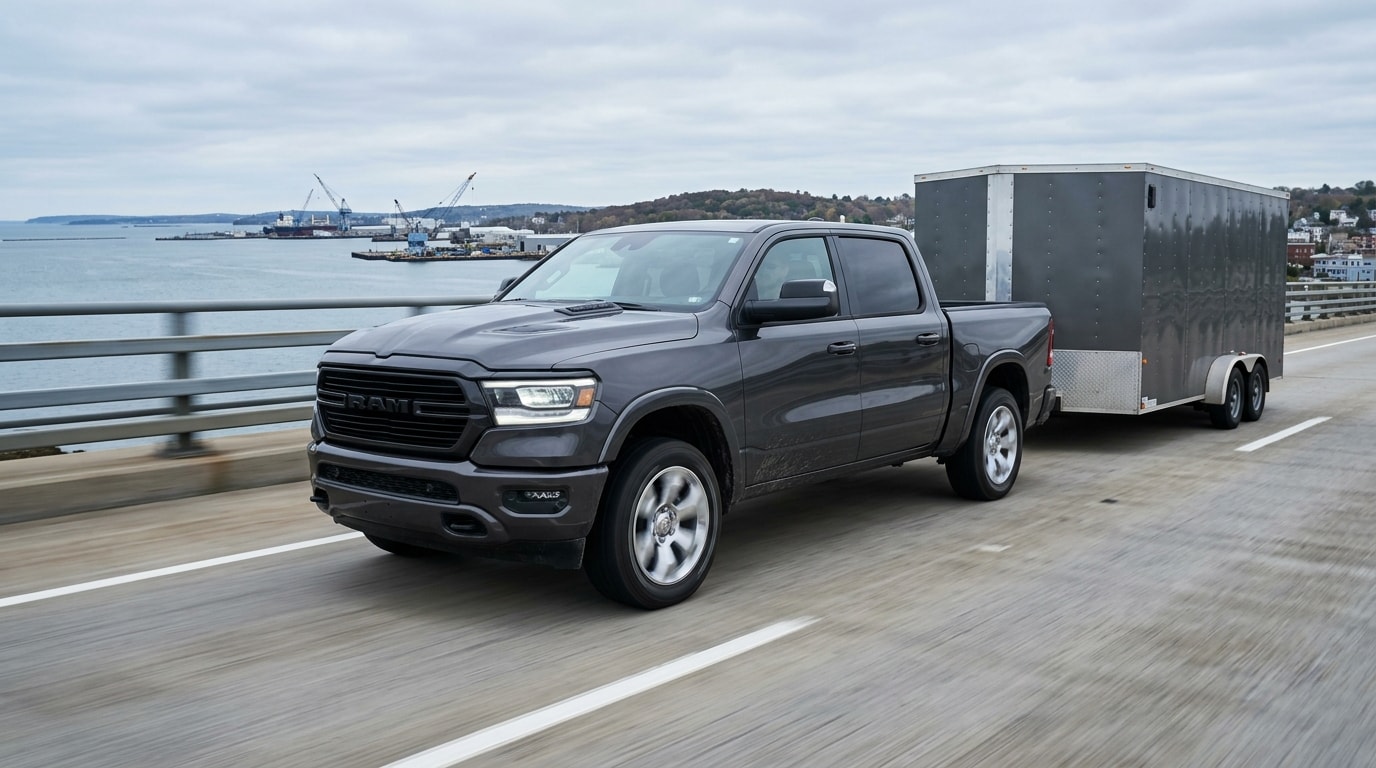
Under the hood, the 2026 Ram 1500 offers multiple high-output powertrain options engineered for work and performance. These include the 3.6-liter Pentastar V6 generating 305 horsepower, the 5.7-liter HEMI V8 with eTorque delivering 395 horsepower and 410 lb-ft of torque, and the Hurricane 3.0-liter twin-turbo inline-six engines producing up to 540 horsepower. The range-extended electric Ram 1500 REV pushes capability even further with an estimated output of 647 horsepower and a maximum towing capacity of up to 14,000 pounds. Because properly equipped Ram 1500 models frequently haul and tow over 10,000 pounds, brake friction components experience intense thermal loads during heavy deceleration.
In coastal New England environments, winter road salt combined with humid maritime air accelerates surface oxidation on exposed undercarriage components. Truck drivers navigating urban traffic through Providence often experience faster pad wear due to frequent stop-and-go driving along highway corridors and riverfront bridges. During a standard service visit, factory-trained technicians inspect pads, rotors, calipers, brake lines, and anti-lock braking system sensors using OEM protocols to maintain factory stopping power.
When truck owners ask during a multi-point inspection how long their factory pads will last, experienced service advisors note that daily highway commuters often reach 60,000 miles while heavy trailering drops that window closer to 30,000 miles. Paying attention to early signs like squeal indicators, steering wheel pulsation, or extended stopping distances prevents minor pad wear from turning into costly rotor scoring. Truck owners can visit our Dartmouth service center or arrange an inspection by calling our team at (508) 984-1900.
Table of Contents
- What Type of Front Brake Rotors Does a 2026 Ram 1500 Use?
- What Are the Pros and Cons of Ceramic vs. Semi-Metallic Brake Pads on Ram Trucks?
- Do Performance and Towing Brake Upgrades Significantly Increase Cost?
- What Tools and Skills Are Required for a DIY Ram 1500 Brake Job?
- What Questions Should You Ask Before Approving Ram Brake Service?
- Quick Answers About 2026 Ram Truck Brake Care
What Type of Front Brake Rotors Does a 2026 Ram 1500 Use?
The 2026 Ram 1500 uses heavy-duty, ventilated cast-iron disc rotors on the front axle, engineered specifically to dissipate rapid thermal build-up during heavy stops and trailering. These front rotors feature outer diameters measuring between 13 and 14 inches, utilizing internal cooling vanes positioned between two friction faces to draw cool air through the assembly as the wheel rotates.
Standard factory front rotors are cast using high-tensile grey iron alloys designed to handle the mechanical stresses of a full-size pickup. For severe-duty applications or performance towing upgrades, high-carbon iron formulations and protective anti-corrosion coatings maintain structural integrity against thermal warping and environmental degradation. The internal ventilation vanes force expanding hot gases away from the friction face, helping maintain solid pad-to-rotor contact under continuous braking.
On well-equipped 2026 Ram 1500 models, four-wheel disc brakes work in concert with electronic stability control and modern driver-assist systems. Maintaining precise factory tolerances for rotor thickness and lateral runout ensures proper pedal feel and hydraulic response when the system applies pressure. Utilizing certified replacement components like genuine Mopar brake components helps preserve the truck's engineered stopping calibration and safety rating under maximum payload conditions.
Trucks operating near coastal waterways in Fall River face persistent salt air exposure, which accelerates surface rust scale on non-friction areas such as the rotor hat and cooling channels. Selecting coated or treated rotors prevents rust flaking that could otherwise lodge between the caliper bracket and pad slide pins.
What Are the Pros and Cons of Ceramic vs. Semi-Metallic Brake Pads on Ram Trucks?
Ceramic brake pads deliver quiet operation and low dust generation for daily highway driving, whereas semi-metallic brake pads provide superior heat dissipation and stronger initial bite for heavy towing and commercial payloads. Selecting between ceramic and semi-metallic friction materials depends on how much weight the truck hauls and the primary driving environment.
Ceramic brake pads are engineered from dense ceramic compounds blended with copper or aluminum fibers. They offer significant noise dampening, low rotor abrasion, and generate a light-colored dust that does not readily adhere to aluminum wheels. However, under continuous heavy towing or sustained downhill mountain driving with a loaded trailer, ceramic pads can experience thermal fade once operating temperatures pass their optimal limit.
Semi-metallic brake pads contain between 30 and 65 percent metal alloys, including steel, iron, and copper fibers bound with synthetic resins. This high metallic content transfers heat away from the braking surface rapidly, delivering consistent pedal response during high-demand deceleration. The tradeoffs for semi-metallic pads include higher brake dust production, increased rotor wear over time, and occasional cold squeal under light pedal pressure.
- Ceramic Brake Pads: Ideal for daily commuting, light-duty hauling, quiet stopping, and low wheel dust.
- Semi-Metallic Brake Pads: Essential for maximum trailering, commercial work payloads, aggressive heat dissipation, and immediate cold friction bite.
Do Performance and Towing Brake Upgrades Significantly Increase Cost?
Upgrading to severe-duty towing brake kits or slotted and coated rotors increases total component costs by approximately 30 to 50 percent compared to standard original equipment replacement parts. While standard pad and rotor service on a single axle falls into baseline routine maintenance ranges, high-friction pads and heavy-duty rotors require a higher investment due to specialized metallurgy and anti-corrosion plating.
Severe-duty brake upgrades feature high-carbon rotor alloys, zinc or thermic protective coatings, and heavy-duty semi-metallic pad compounds designed to resist fade at temperatures exceeding 1,000 degrees Fahrenheit. The added manufacturing precision required for progressive slotting or directional internal cooling vanes accounts for the price step over smooth cast-iron replacement rotors.
For Ram 1500 owners who regularly tow travel trailers, boats, or heavy job-site equipment, performance braking components provide long-term durability by extending replacement intervals under severe thermal strain. The enhanced heat dissipation protects hydraulic calipers, wheel bearings, and speed sensors from thermal degradation over time.
When evaluating friction upgrades, installing heavy-duty pads and slotted or coated rotors on the front axle delivers the highest performance return, as the front brakes handle up to 70 percent of total vehicle stopping force during hard deceleration.
What Tools and Skills Are Required for a DIY Ram 1500 Brake Job?
Performing a DIY brake pad and rotor replacement on a 2026 Ram 1500 requires moderate mechanical proficiency, standard hand tools, a heavy-duty floor jack, jack stands, a calibrated torque wrench, and specialized caliper piston press tools. Completing the service at home typically takes two to three hours per axle for experienced DIY mechanics.
Essential equipment includes a 1/2-inch drive metric socket set, C-clamps or brake caliper retraction tools, a wire brush for removing rust scale from bracket mounts, high-temperature synthetic brake grease, and aerosol brake cleaner. Because recent Ram 1500 models utilize an electronic parking brake assembly on the rear axle, servicing rear brakes requires putting the system into service mode via the interior touchscreen menu or an electronic scan tool to safely retract the electric caliper actuators.
- Secure the truck on level ground using heavy-duty jack stands rated for full-size pickup trucks.
- Remove the wheel assembly and unbolt the caliper guide pins and mounting bracket.
- Clean all sliding surfaces, slide pins, and anti-rattle hardware thoroughly before applying synthetic brake lubricant.
- Compress the caliper piston smoothly while inspecting the rubber dust boot for tears or fluid leaks.
- Torque all bracket bolts, caliper pins, and wheel lug nuts to strict factory torque specifications.
Skipping proper torque procedures or failing to thoroughly clean hub mating surfaces can cause rotor runout, brake pedal pulsation, and premature pad wear. Truck owners who lack specialized scan tools or heavy lifting equipment often choose professional shop service to ensure proper ABS calibration.
What Questions Should You Ask Before Approving Ram Brake Service?
Before approving a brake repair estimate on your Ram truck, verify whether the service department installs original equipment manufacturer parts, includes new hardware clips and slide pin lubrication, turns or replaces rotors, and conducts a brake fluid inspection. Clarifying these scope details upfront ensures long-term stopping performance and prevents unexpected fees.
When reviewing a quote, confirm whether the shop uses factory-approved friction materials or generic aftermarket pads. Genuine Mopar components match original factory stopping calibrations and maintain compatibility with advanced driver-assist systems. Asking whether rotor replacement includes coated options ensures maximum rust resistance in coastal salt-belt conditions.
- Are genuine Mopar or equivalent severe-duty components being installed on both axles?
- Does the estimate include new hardware clips, slide pin cleaning, and high-temperature lubrication?
- Is rotor resurfacing being measured against strict minimum thickness tolerances, or are new rotors included?
- Will technicians test the moisture content in the brake fluid and inspect hydraulic lines for corrosion?
- What warranty term covers both parts and labor following service completion?
Taking time to review these specific details ensures your truck receives complete, factory-compliant care. For convenience, truck owners can explore scheduling a service appointment online and check current service and parts specials prior to their visit.
Quick Answers About 2026 Ram Truck Brake Care
Q: How can I tell if my Ram 1500 brake pads need replacement?
Early indicators of worn brake pads include a high-pitched metallic squeal caused by built-in wear indicators, extended stopping distances, a soft pedal feel, and steering wheel vibration during deceleration. Grinding noises indicate that pad friction material is completely worn away, allowing metallic backing plates to contact the rotor surface directly and requiring immediate service.
Q: How long do brake rotors typically last on a Ram pickup?
Brake rotors on a Ram 1500 generally last between 50,000 and 70,000 miles under normal driving conditions. Rotors often endure through two full sets of brake pads before requiring replacement or resurfacing, provided they remain above minimum discard thickness specifications and show no severe thermal cracking or warping.
Q: Why does my Ram truck steering wheel shake when applying the brakes?
Steering wheel pulsation or pedal vibration under braking is primarily caused by uneven rotor wear, thermal warping, or pad material transfer on the rotor face. Heavy towing or continuous hard braking generates extreme heat that distorts the flat rotor surface, creating high and low spots that cause pulsation as pads clamp down.
Q: How does winter road salt impact full-size truck brake systems?
Winter road salt and coastal humidity cause oxidation and corrosion on metal brake components, particularly calipers, slide pins, and rotor hubs. Corrosion buildup causes caliper slide pins to bind, leading to uneven pad wear, sticking brakes, decreased fuel economy, and premature rotor replacement if components are not periodically cleaned and lubricated.
Q: Does brake fluid need to be replaced during a standard brake pad service?
Brake fluid absorbs moisture over time, lowering its boiling point and promoting internal hydraulic corrosion. A complete brake inspection includes testing fluid moisture content, and a hydraulic fluid flush is recommended every two to three years or 30,000 miles to maintain firm pedal pressure and protect internal ABS hydraulic valves.
Maintaining the braking system on your Ram 1500 protects stopping performance, trailer stability, and long-term vehicle dependability. Visit our Dartmouth facility located at 42 State Rd, Dartmouth, MA 02747 to consult with factory-certified technicians, or reach out directly by calling (508) 984-1900 to schedule your comprehensive brake inspection.
© 2026 Colonial South Chrysler Ram Jeep and Dodge. All rights reserved.